


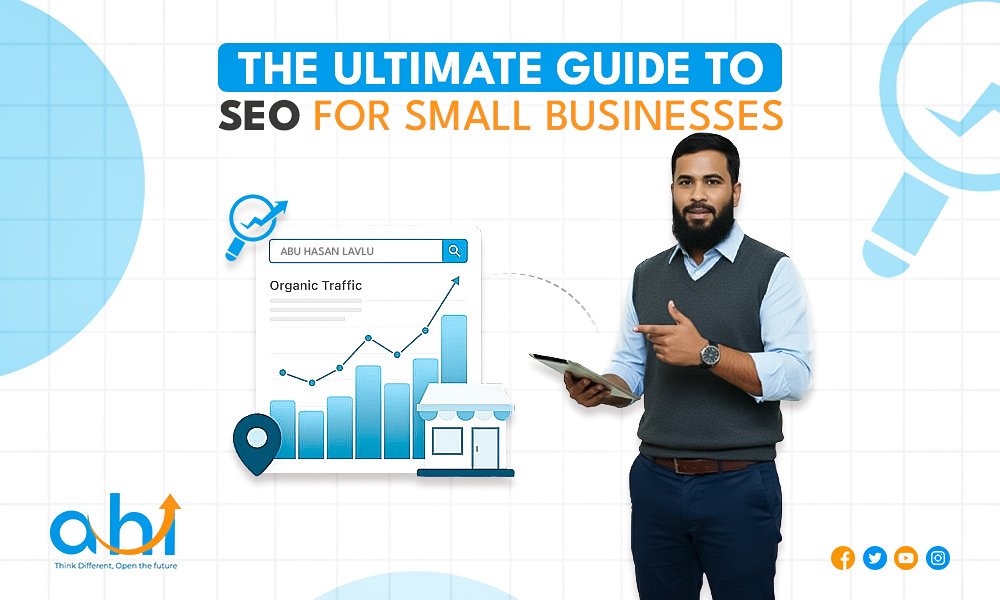
In today’s digital world, a strong online presence is essential for small business success. Ninety-three percent of online experiences start with a search engine, and with over 6.5 million Google searches conducted every minute, the opportunity to connect with potential customers is enormous. This guide covers everything you need about SEO for small businesses, from basics to proven strategies that drive traffic, leads, and sales.
What is SEO in a small business?
SEO for small businesses involves optimizing your website and content to appear prominently in search results when potential customers search for what you offer. For small businesses, SEO often overlaps with local SEO since most serve specific geographic areas. This local focus is an advantage you can create targeted strategies that speak directly to customers in your area. Small business SEO includes keyword research, on-page optimization, content creation, building local presence through Google Business Profile, and technical elements like site speed and mobile optimization.
Why is SEO important for small businesses
SEO importance cannot be overstated. Ninety-three percent of online experiences start with a search engine. If your business doesn’t appear in results, you’re invisible to most potential customers. Nearly half of all Google searches have local intent, and eighty-eight percent of consumers who conduct a local search visit or call a store within a day.
The financial impact is impressive. SEO drives over one thousand percent more traffic than organic social media, and companies report an average ROI of seven hundred forty-eight percent. Small businesses investing in SEO report returns exceeding four hundred percent. SEO also builds trust when your business appears at the top of results, consumers perceive you as an authority.
Is SEO worth it for small businesses?
Yes, absolutely. Forty-nine percent of marketers say organic search delivers the highest ROI of any marketing channel. Unlike paid ads that stop generating traffic when you stop paying, SEO continues driving visitors month after month.
Eighteen percent of local searches result in a purchase within twenty-four hours. That means nearly one in five people searching locally are ready to buy immediately. Sixty-one percent of small businesses aren’t investing in SEO, presenting a window of opportunity. Seventy-one percent of businesses doing SEO report satisfaction with results.
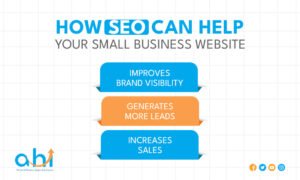
How SEO can help your small business website
Improves brand visibility
Better SEO means more visibility in search results. When people consistently see your business at the top of results, they view you as an authority. This perception builds trust and makes customers more likely to choose you over unfamiliar competitors. The visibility advantage compounds over time as your website ranks for more keywords.
Generates more leads
SEO brings qualified leads people actively searching for what you offer. A survey from Databox found that SEO drives the most valuable leads compared to channels like referrals or email. Twenty-eight percent of searches with local intent result in a purchase, demonstrating that people finding you through search are ready to become customers, not just browsing.
Increases sales
Because organic traffic brings quality leads, SEO naturally drives sales. However, your website pages must be optimized for conversions too. Product or service pages should highlight customer needs, include clear calls-to-action, and make it easy to contact you. Eighty-eight percent of consumers who do a local search visit or call a business within twenty-four hours, meaning local SEO can drive foot traffic within a day.
What’s the Best SEO Strategy for Small Businesses?
The best strategy balances ambition with practicality. Embrace your local advantage and you can dominate local results by focusing on your geographic area. Prioritize quality over quantity. Thoroughly optimize ten pages rather than poorly optimize fifty. Create fewer pieces of truly helpful content rather than churning out thin blog posts.
Think long-term but start with quick wins. Claiming your Google Business Profile can improve visibility within weeks. Focus on what makes you unique and integrate SEO with overall business goals. Be consistent rather than sporadic/modest but consistent effort delivers better results than intense bursts followed by neglect. Measure what matters: leads generated, phone calls received, foot traffic, and sales.
5 easy SEO tips for small businesses
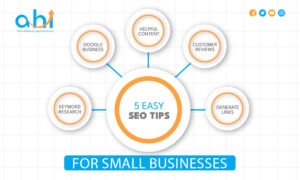
1. Conduct keyword research
Keywords are words and phrases people search for that are relevant to your business. Understanding what customers search for allows you to optimize your website accordingly. The key is to specifically target long-tail keywords (longer, specific phrases) with less competition.
If you run personal training in Miami, competing for “personal training” is difficult. Instead, target “Pilates instructor in South Beach,” “female personal trainer in South Beach,” or “personal training for seniors in South Beach.” These specific terms are easier to rank for and attract more qualified leads. Geographic modifiers are particularly valuable—always include your city or neighborhood.
2. Claim your Google Business Profile
Your Google Business Profile is arguably the most important local SEO element. Without it, you cannot appear in the Local Pack the top three business listings with a map. Eighty-eight percent of people use Google Maps to find local businesses, yet fifty-six percent of local businesses haven’t claimed their profile.
Claim your profile by searching for your business on Google and following verification steps. Add accurate hours, phone number, website, and detailed description. Upload high-quality photos. Customers are two-point-seven times more likely to trust complete profiles. Verified businesses receive over twenty-one thousand views per year on average.
3. Create helpful content
Content creation is powerful yet often overlooked. A blog lets you target additional keywords, answer customer questions, and establish expertise. Create genuinely helpful content that serves audience needs. Think about questions customers ask repeatedly and common problems they face.
Articles exceeding three thousand words receive seventy-seven percent more backlinks than shorter pieces. Update existing content regularly businesses that repurpose content have seen one hundred six percent traffic increases. Publish consistently, whether weekly or monthly. Include target keywords in titles and headers naturally, add alt text to images, and include internal links.
4. Ask for customer reviews
Reviews directly impact local search rankings and influence consumer trust. Reviews and ratings significantly affect local SEO performance, particularly for Google Maps rankings. Top local results typically have both high ratings (4.5 stars or above) and substantial review numbers.
Businesses responding to at least twenty-five percent of reviews see thirty-five percent more revenue on average. Make it easy to add a Google Review link on your website and in follow-up emails. Ask shortly after positive experiences. Respond to all reviews, both positive and negative, showing you value feedback. Showcase best reviews on your website as testimonials.
5. Generate links
Link building is impactful but challenging. Ninety-five percent of pages have zero backlinks, and only one in twenty pages without backlinks gets traffic. The top result has nearly four times more backlinks than positions two through ten.
Start with internal linking links between pages on your site. For external backlinks, pursue local partnerships, business directories, press coverage, and guest posting. Businesses with blogs receive ninety-seven percent more backlinks. Avoid buying links or link schemes. Ninety-one percent of SEO experts believe link building remains effective, and backlinks continue to be a top-three ranking factor in 2025.
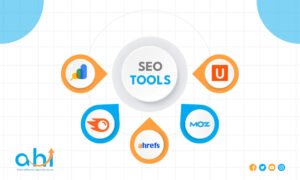
The best seo tools for small businesses
Google Search Console
Google Search Console is essential if you want your website to show up in search results. This free tool connects directly to your website and provides insights into how Google sees your site, which keywords drive traffic, technical issues affecting rankings, and page performance. Track clicks, impressions, CTR, and keyword positions. The tool monitors search traffic, identifies which queries lead people to your site, and alerts you about problems. Google Analytics provides data about visitors where they come from, which pages they visit, how long they stay, and which content drives conversions.
Semrush
Semrush is an all-in-one SEO platform offering digital marketing tools to help your website rank highly. The platform provides comprehensive keyword research, site audits, backlink analysis, and position tracking. Semrush’s Keyword Magic Tool and Keyword Strategy Builder help you quickly find the best keywords. The Site Audit tool identifies issues like broken links, misconfigured redirects, and slow page loads with actionable fixes. Semrush Pro starts at $139.95 per month, suitable for small businesses with essential SEO tools. Beyond SEO, it includes PPC advertising tools, social media features, and content marketing capabilities.
Ahrefs
Ahrefs is known for backlink analysis and provides extensive data covering backlink reports, keyword research, competitor analysis, and site audits. Ahrefs Webmaster Tools is completely free to monitor site SEO health, identify technical issues, discover traffic-generating keywords, and check backlink profiles. The platform has a clean, intuitive interface with tutorials and guides for beginners. Paid versions offer advanced keyword research, comprehensive site audits, rank tracking, and content analysis. The platform excels at competitive analysis, see which keywords competitors rank for, examine their backlink profiles, and identify content gaps.
Moz Pro
Moz Pro is an all-in-one SEO solution providing advanced keyword research, rank tracking, site auditing, backlink analysis, and SERP tracking. The platform is known for its user-friendly interface and strong educational resources. Standout features include Keyword Explorer for discovering new keyword opportunities and filtering by difficulty and relevance. Moz’s proprietary Domain Authority, Page Authority, and Brand Authority scores offer a comprehensive view of site performance. Pricing starts at $49 per month with plans scaling to $299 per month. The platform offers a 30-day free trial for testing all features.
Ubersuggest
Ubersuggest is a free SEO tool specializing in generating new keyword ideas, founded by entrepreneur Neil Patel. It’s appreciated for providing advanced features at lower cost compared to competitors, making it accessible for beginners and small businesses. The tool offers backlink opportunities, traffic estimation, top-performing content analysis, SERP analysis, and ranking tracking. Site Audit runs SEO audits and gives recommendations on improvements. Ubersuggest starts at just $29 per month with one-time payment options many find more economical. There’s also a free version with daily searches and keyword ideas, plus a 30-day free trial.
Conclusion
SEO for small businesses is fundamental to sustainable growth in the digital age. With most online experiences beginning with search engines and nearly half of searches having local intent, optimization is essential for capturing customers actively looking for what you offer. SEO doesn’t require massive budgets or extensive expertise. Small, consistent efforts compound over time to deliver significant results.
By focusing on fundamental keyword research, Google Business Profile, helpful content, customer reviews, and quality links you can dramatically improve visibility. Remember SEO is a long-term investment. Success comes from consistent effort, continually refining your approach. With over sixty percent of small businesses not investing in SEO, there’s opportunity to establish dominance before competitors catch up.
Common Questions Concerning SEO for Small Business
How long does it take to see results from SEO?
At least 90 days is what SEO results for targeted keywords take to show for the first time. If there is an immediate winning opportunity, it is claiming your Google Business Profile, which can elevate visibility in a matter of weeks. Comprehensive results, however, depend on whether your industry content is of good quality and whether your backlinks are on par with the competition. For long term success, it is a must to have patience and consistency.
How much of those SEO results can I achieve on my own, and how much of that should I hire an expert?
Of course, the basics of SEO can always be DIY. However, it usually requires lots of time, and effort, and is complex. The algorithm that Google uses is always being updated, which makes a lot of existing strategies go obsolete very quickly. To avoid time loss, it is best for an SEO expert to take care of the issue. More often than not, hiring someone is more favorable economically than taking a DIY approach, especially for small business owners with pre-existing time constraints.
Is there a difference between SEO and local SEO?
Regular SEO is addressing a wide geographic region, as the focus of local SEO is targeting particular localities and their surrounding neighborhoods. Local SEO is very important for small businesses that have a physical presence. The standard conversion rate for SEO is 2.4\%, while for local SEO, it can reach a whopping 72\%. Therefore, it is an essential asset for businesses that are location-dependent.
How Important is Content Marketing for SEO?
You cannot efficiently improve SEO without content marketing. Effective content is vital for targeting additional keywords, providing answers for customer queries, and obtaining important backlinks. For example, articles with word counts exceeding 3000 receive 77% more backlinks than shorter articles. Also, businesses with blogs receive 97% more backlinks than businesses without blogs. Overall, these backlinks improve search rankings.
Ready to Dominate Your Local Search Results?
Implementing a successful SEO strategy takes time, expertise, and consistent effort resources that many small business owners simply don’t have while running their business. If you’re serious about growing your online presence but don’t have the bandwidth to do it yourself, I can help.
I’m Abu Hasan Lavlu, an SEO specialist who helps small businesses like yours climb to the top of search rankings and attract more qualified customers. I’ve helped dozens of local businesses dramatically increase their visibility, generate more leads, and boost their revenue through strategic SEO.
Contact me today for a free SEO consultation, and let’s start getting your business the visibility it deserves. Your future customers are searching right now, make sure they find you first.